
Innovative Game-changer Invention
- Business Model.
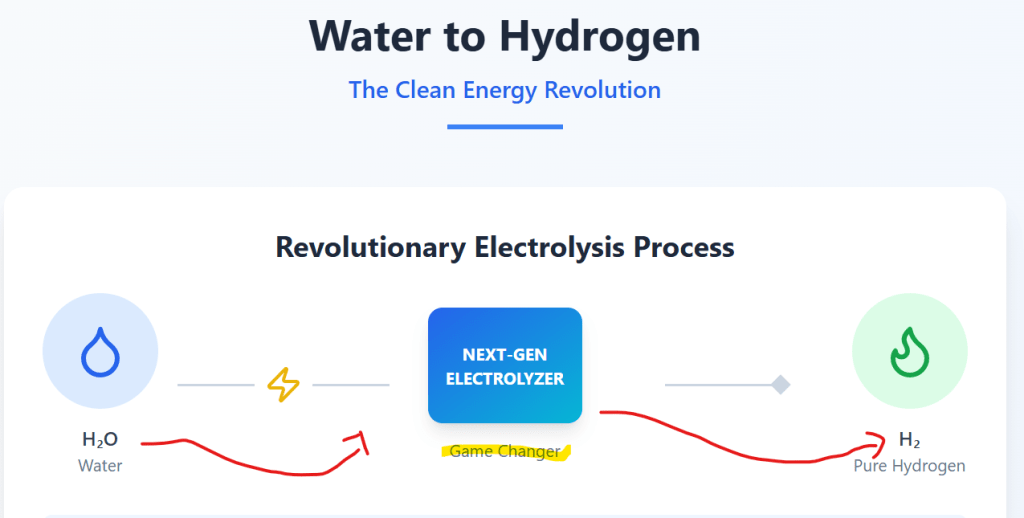
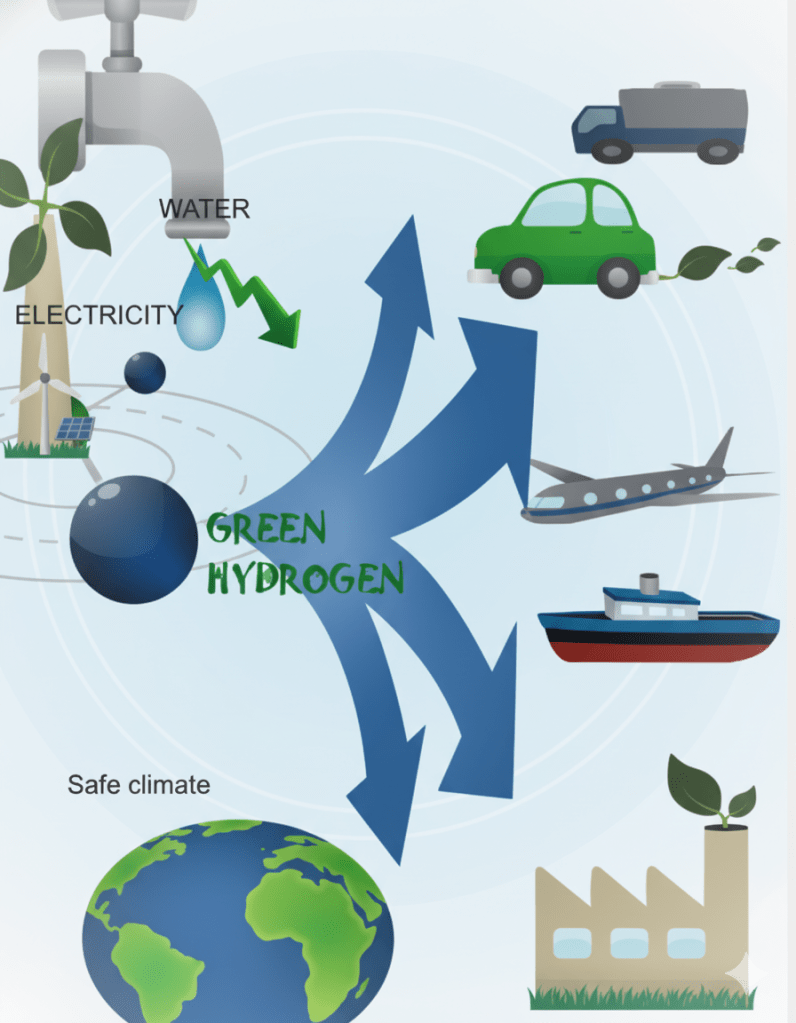
- Green Hydrogen Electrolyzer: Innovative Game-changer Invention
- This transformative innovation is a technological platform with diverse applications, including portable, dischargeable mini-hydrolyzers.
1. Value Proposition
- On-demand hydrogen production—no need for storage or transport.
- Ultra-low-cost fabrication using recycled materials.
- Safe, portable, and disposable units.
- Operates at room temperature
- High energy efficiency.
- Cost/efficiency
- No platinum / Iridium catalysts—eco-friendly and cost-effective.
- Overcome actual technologies: alkaline, proton exchange membrane (PEM), solid oxide, anion exchange membrane (AEM).
2. Customer Segments
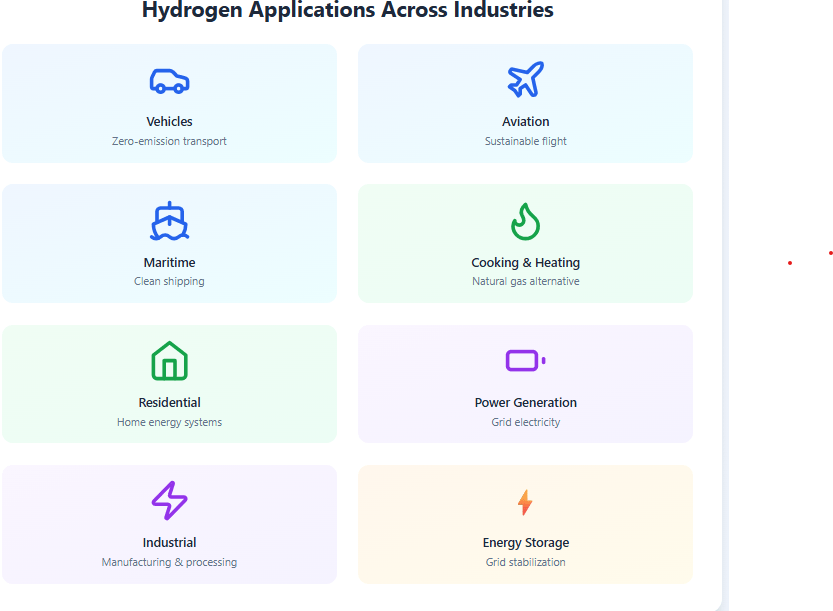
- Renewable energy companies: wind, solar, geothermal, etc.
- Fuel Cell chargers.
- Home Appliances (cooking, heating, water heaters).
- Transportation sectors (ships, airplanes, internal combustion engines).
- Off-grid communities and emergency response units.
- Industrial chemical producers (synthetic fuels).
- Industrial applications (mixtures with gas natural others for metallurgy and cement).
- Of grid applications: solar & wind.
3. Channels
- Home Appliances manufactures.
- Direct online sales via the company website.
- Strategic partnerships with clean energy providers.
- Trade shows and green tech expos.
- Government and NGO collaborations for sustainability projects.
4. Customer Relationships
- Educational outreach and sustainability advocacy.
- Technical support and integration consulting.
- Subscription model for regular supply of electrolyzers.
- Electrolite suply.
- Dischargeable Parts supply (electrodes racks).
5. Revenue Streams
- Unit sales of electrolyzes.
- Unit sales of catalyzers.
- Unit sales of electrolytes.
- Unit sales of dischargeable electrodes.
- Licensing of the technological platform.
- Consulting and integration services.
- Strategic partnerships and joint ventures.
6. Key Resources
- Proprietary designs, catalyst, electrodes, and fabrication process.
- R&D team focused on circular economy innovations.
- Supply chain for recycled materials.
- Intellectual property and patents. (by today it is a secret technology)
- Key Activities
- Funding.
- Manufacturing and quality control.
- Research and development.
- Development as technological platform.
- Constant improvements and development of the applications.
- Marketing and customer education.
- Regulatory compliance and certification.
- Technology diffusion on social media
- Promotion as a global warming solution.
8. Key Partnerships
- Recycling companies for material sourcing.
- Academic institutions for research collaboration.
- Government agencies for green energy initiatives.
- Logistics providers for global distribution.
- Markets developers.
- Appliances and vehicles parts manufactures.
9. Cost Structure
- Low-cost production due to recycled inputs.
- R&D and innovation investment.
- Marketing and outreach.
- Distribution and logistics.
10. Competency
- Hydrogen production as oil products business model.
- Hydrogen marketing as oil.
- Fossil fuels
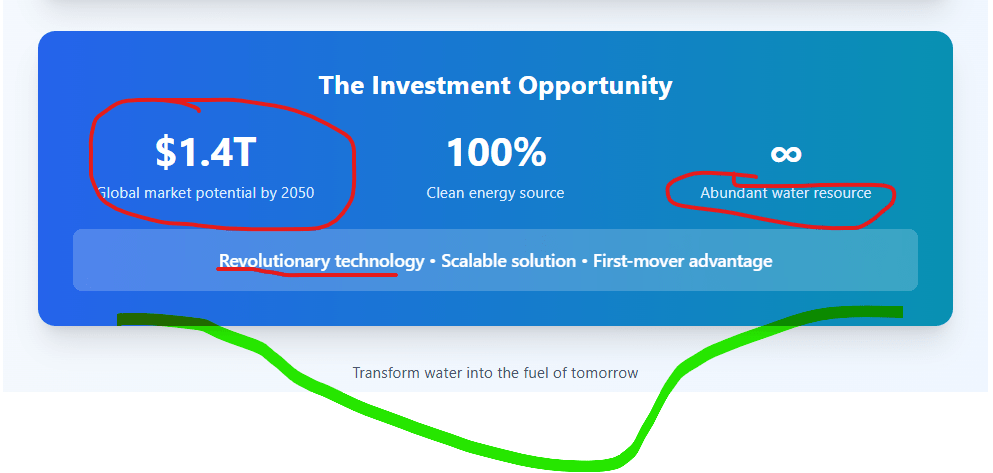
This model positions Lovely Nature as a disruptor in the green hydrogen space, emphasizing sustainability, affordability, and accessibility as a solution to global warming
 Lovely Nature